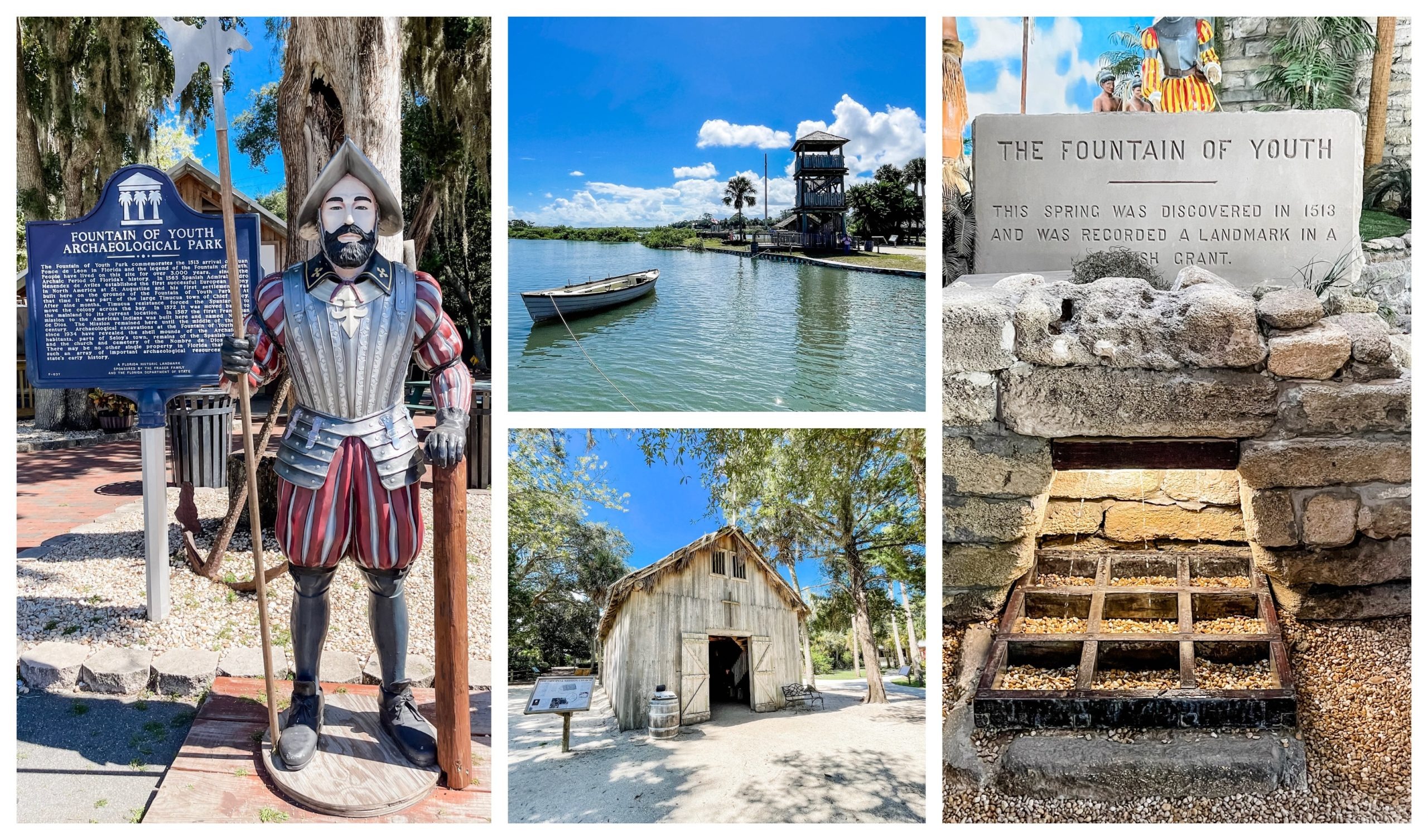
What you should know about Saint Augustine Florida!
Twenty-five miles north of Palm Coast on I-95 sits one of the most extraordinary cities in the United States — and one that most Americans know far less about than it deserves. Saint Augustine, Florida, founded on September 8, 1565, by Spanish Admiral Pedro Menéndez de Avilés, is the oldest continuously occupied European settlement in what is now the contiguous United States. It has been here longer than the Constitution, longer than Jamestown, longer than Plymouth Rock. Over 450 years of documented history are compressed into a small, walkable city on the northeast Florida coast, and the combination of that history, the natural setting, the beaches, the food, and the growing real estate market makes Saint Augustine one of the most compelling destinations in all of Florida.
Denise Fernandes — whose service area extends throughout Northeast Florida — shares everything you should know about Saint Augustine: where it sits geographically, what its history means for daily life, what the real estate market looks like, and why so many buyers are making this ancient city part of their Florida chapter.
TABLE OF CONTENTS:
01 The History — 450+ Years of American Story
02 The Lifestyle — What Living Here Actually Feels Like
03 The Real Estate Market — What Buyers Should Know
04 How Saint Augustine Connects to Flagler County
05 Key Facts Every Visitor and Buyer Should Know
Is Saint Augustine — or Nearby Flagler County — Right for You?
01 The History — 450+ Years of American Story
Founded in 1565, capital of Spanish Florida for 200 years, and the birthplace of the American coastal vacation
Saint Augustine's history is genuinely extraordinary by any measure. Pedro Menéndez de Avilés founded the settlement on the feast day of Saint Augustine of Hippo in 1565 — 42 years before the English founded Jamestown, and 55 years before the Pilgrims landed at Plymouth. The Spanish colonial government controlled the city for nearly 200 years, using it as the capital and military anchor of Spanish Florida and building the Castillo de San Marcos — the oldest masonry fort in the continental United States, still standing in perfect condition on the waterfront of the historic district — to defend it. The British held the city from 1763 to 1783, the Spanish returned briefly, and the United States took possession of Florida in 1821.
In the 1880s, railroad and real estate magnate Henry Flagler recognized Saint Augustine's potential and transformed it into America's first winter resort destination, building the Hotel Ponce de León (now Flagler College) and the Alcazar Hotel (now the Lightner Museum) in a spectacular Spanish Renaissance Revival style that defined the city's visual character for generations. His Florida East Coast Railway connected the city to the rest of the country, making Saint Augustine the place where American coastal tourism began. Walking through the historic district today — past the Spanish Quarter, the Cathedral Basilica of St. Augustine (1797), the Ximenez-Fatio House (c. 1797), and the Oldest House (begun 1723) — the cumulative effect of this history is unmistakable. No other city in Florida, and few in the country, can offer this depth of lived historical experience as part of daily life.
02 The Lifestyle — What Living Here Actually Feels Like
Cobblestone streets, world-class dining, beaches, and a small city with a large personality
Living in Saint Augustine means inhabiting a city that has been continuously refined for over four centuries — and the result is a place with a rare density of quality per square mile. The historic district is genuinely walkable, with cobblestone streets, horse-drawn carriages, hidden courtyards, and a collection of independent restaurants, wine bars, galleries, and boutiques that rivals much larger cities in its depth and originality. The dining scene ranges from fresh coastal seafood at waterfront institutions like Cap's on the Water to sophisticated farm-to-table cuisine in the historic district to the kind of neighborhood café breakfast that anchors a community's daily rhythm.
The beaches of Saint Augustine — Vilano Beach to the north and Saint Augustine Beach to the south — are uncrowded, beautiful, and accessible, with the Anastasia Island State Park providing one of the most impressive natural beach environments anywhere on Florida's Atlantic coast. The St. Augustine Alligator Farm, founded in 1893 and one of Florida's original tourist attractions, doubles as a world-class wildlife destination with one of the most impressive bird rookeries in the eastern United States during nesting season. The Saint Augustine Lighthouse, the St. Augustine Amphitheatre, Flagler College's stunning campus, the Lightner Museum, and a year-round calendar of festivals, markets, and community events give the city a cultural richness that goes well beyond what its size would predict.
03 The Real Estate Market — What Buyers Should Know
St. Johns County: one of Florida's most competitive and consistently appreciating real estate markets
Saint Augustine is located in St. Johns County — which has earned a national reputation as one of the most desirable places to live in Florida and in the country. St. Johns County consistently ranks among the top school districts in Florida, the top counties for quality of life in the southeastern United States, and among the fastest-appreciating real estate markets in the region. Median home prices in the Saint Augustine area have risen significantly over the past decade, reflecting sustained demand from buyers across the demographic spectrum: families prioritizing the school district, retirees drawn to the history and coastal lifestyle, remote workers who want a small-city environment with good infrastructure, and investors who recognize the county's long-term appreciation trajectory.
The real estate landscape in Saint Augustine and St. Johns County includes a range of housing types and price points: historic properties in the downtown district, coastal homes and condominiums on Anastasia Island and Vilano Beach, master-planned communities like Nocatee (one of the top-selling communities in the United States for multiple consecutive years), and rural properties in the county's western areas. For buyers coming from Flagler County or considering a move that includes Saint Augustine within commuting or lifestyle distance, working with an agent who understands both markets is a meaningful advantage. Denise Fernandes covers Northeast Florida including the Saint Augustine area and knows the cross-market dynamics that affect buyers making decisions across county lines.
04 How Saint Augustine Connects to Flagler County
30 minutes from Palm Coast — close enough for regular visits, far enough for each to feel like its own world
One of the most valuable things about living in Flagler County — specifically Palm Coast — is the proximity to Saint Augustine. The drive from most Palm Coast neighborhoods to the Saint Augustine historic district is approximately 25 to 35 minutes on I-95 or the scenic A1A coastal highway. That proximity means Saint Augustine is not a destination that requires planning — it is a Tuesday dinner option, a Saturday morning farmers market trip, a spontaneous visit to the waterfront on a beautiful afternoon. Residents of Palm Coast regularly list Saint Augustine proximity as one of the meaningful quality-of-life advantages of their address.
Conversely, buyers who are drawn to Saint Augustine but find its real estate market pricing challenging — St. Johns County home prices run significantly higher than Flagler County's median — frequently discover Palm Coast as an alternative that provides daily lifestyle access to Saint Augustine's amenities while delivering substantially more home value per dollar. For those buyers, Flagler County is the practical answer to a Saint Augustine aspiration. Denise Fernandes works with buyers on both sides of that equation, helping them understand which market serves their priorities and budget most effectively.
05 Key Facts Every Visitor and Buyer Should Know
Practical information for anyone spending time in or considering a move to Saint Augustine
Saint Augustine's population within the city limits is relatively small — approximately 15,000 to 17,000 permanent residents — but the broader St. Johns County metro area encompasses over 300,000 people across a rapidly growing county. The city's compact size and historic preservation ordinances keep the downtown character intact while the surrounding communities continue to develop. Traffic on A1A and the historic district's main corridors can be significant during peak tourist season (spring and fall) and during the city's famous Nights of Lights holiday lighting season (November through January), which draws hundreds of thousands of visitors annually.
Healthcare in the Saint Augustine area is served by Flagler Health+ (now part of HCA Florida) and a growing network of specialist practices and urgent care facilities that have expanded alongside the county's population growth. The school district — St. Johns County School District — is one of the highest-rated in Florida and one of the primary drivers of the county's exceptional real estate demand. Interstate 95 gives Saint Augustine fast regional access: Jacksonville is 40 minutes north, Daytona Beach 55 minutes south, and Orlando approximately 90 minutes to the southwest. For anyone seriously considering Northeast Florida as home, Saint Augustine and its surroundings represent one of the most compelling destination choices in the state.
Is Saint Augustine — or Nearby Flagler County — Right for You?
Saint Augustine is one of those places that most people respond to immediately and deeply. The history, the setting, the food, the beaches, the sense of a city that has been lived in with care for a very long time — it all adds up to something that feels genuinely special and genuinely rare in modern Florida. Whether you are drawn to Saint Augustine directly or to the communities of Flagler County that put this extraordinary city within easy reach, Denise Fernandes can help you find your place in Northeast Florida's most compelling real estate landscape.